Burning with urination can feel urgent and distracting, yet it does not always mean the same level of risk. A bladder infection might be uncomfortable but straightforward to treat. A kidney infection can start with similar urinary symptoms and then escalate quickly into a whole body illness.
Knowing the difference between a lower urinary tract infection (often called a UTI) and a kidney infection helps you choose the right next step, especially when time matters.
The urinary tract: a quick map
Your urinary tract is designed for one-way flow: kidneys filter blood and make urine, ureters carry urine down to the bladder, and the urethra carries it out. When bacteria enter near the urethra and move upward, infection can develop along that pathway.
Most infections stay in the lower tract, meaning the bladder (cystitis) and sometimes the urethra (urethritis). When bacteria travel higher and inflame kidney tissue, the problem becomes a kidney infection, also called acute pyelonephritis.
UTI vs. kidney infection: what is different
A “UTI” is an umbrella term. It means infection anywhere in the urinary tract. In everyday conversation, though, people often use “UTI” to mean a bladder infection.
A kidney infection is an upper UTI. All kidney infections are UTIs, but not all UTIs involve the kidneys.
The difference is not just anatomy. It is also intensity. Lower UTIs tend to cause local irritation: burning, urgency, and frequent trips to the bathroom. Kidney infections are more likely to cause systemic symptoms: fever, chills, significant fatigue, nausea, and flank or back pain. Because the kidneys are richly supplied with blood, bacteria and inflammation there can spill into the bloodstream and trigger sepsis in severe cases.
Most UTIs are caused by bacteria from the bowel flora, commonly E. coli, that ascend from the urethra into the bladder. This is why risk is higher with factors that make ascent easier or clearance harder, including sexual activity, pregnancy, urinary catheters, urinary obstruction (kidney stones, enlarged prostate), and immune suppression.
Symptoms side-by-side
Symptoms can overlap, which is why a careful history, exam, and urine testing matter. Still, the overall pattern is often clear.
| Symptom or sign | Lower UTI (bladder/urethra) | Kidney infection (pyelonephritis) |
|---|---|---|
| Burning with urination | Common | Can happen, but may not be the main complaint |
| Urinary frequency/urgency | Prominent | Variable |
| Suprapubic discomfort | Common | Less common |
| Blood in urine | Can occur | Can occur |
| Fever and chills | Usually absent or low grade | Common, often higher fever |
| Flank or back pain | Uncommon | Common, may be significant |
| Nausea/vomiting | Uncommon | More common |
| How the person looks | Often still fairly well | Often appears ill, drained, or weak |
A single symptom rarely tells the whole story. The combination matters.
Warning signs that should change your plan today
If symptoms feel “bigger than the bladder,” take that seriously. Kidney infections can progress quickly, and delaying care raises the risk of dehydration, kidney injury, abscess, and bloodstream infection.
These features raise concern for kidney involvement or a complicated infection:
- Fever (especially with chills)
- Flank pain or tenderness along the back under the ribs
- Nausea or vomiting that limits fluids
- New confusion, marked weakness, or fainting
- Symptoms during pregnancy
- Symptoms in a young child, or in an older adult with atypical complaints
One sentence that is often true: a UTI makes you uncomfortable; a kidney infection can make you feel sick all over.
How clinicians confirm what is going on
Symptoms guide suspicion, but testing confirms the diagnosis and helps choose the right antibiotic.
Urinalysis is usually the first step. It checks for white blood cells (pyuria), bacteria, nitrites, and blood. A urine culture then identifies the organism and which antibiotics are likely to work. For kidney infection, cultures are especially useful because treatment is longer and the stakes are higher.
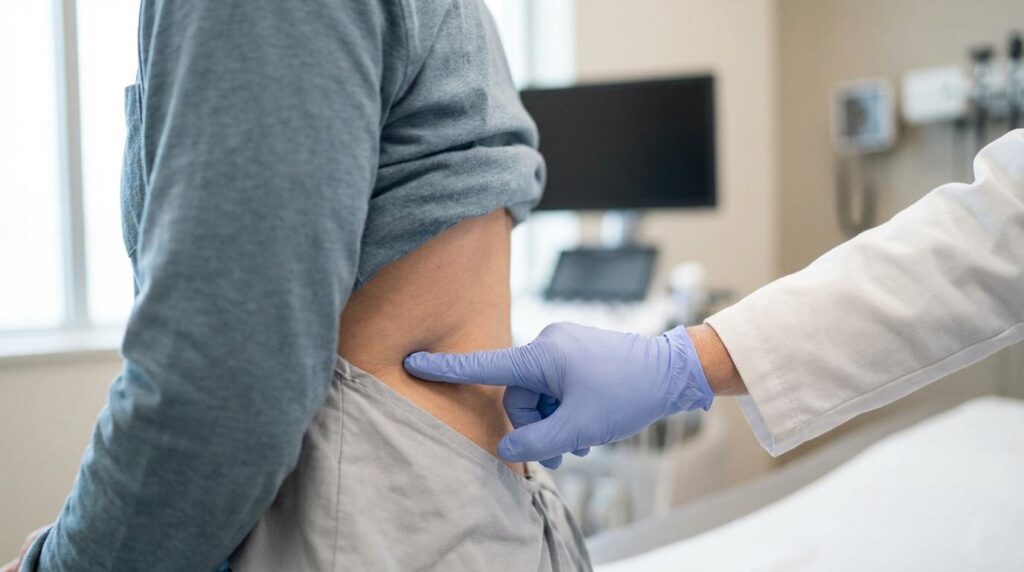
A focused physical exam adds important clues. Tenderness when tapping over the costovertebral angle (where the kidneys sit in the back) supports pyelonephritis. Suprapubic tenderness without flank pain points more toward cystitis.
When the illness is more severe, clinicians may add blood tests to look for inflammation, kidney function changes, or spread into the bloodstream. Imaging is not routine for a simple bladder infection, but it becomes important when there is concern for obstruction, stones, abscess, or poor response to treatment.
Common tests and what they answer include:
- Urinalysis: Is there evidence of infection or inflammation in the urine?
- Urine culture: Which bacteria is causing it, and which antibiotics should work?
- Blood tests: Is the body under stress (infection markers) and are the kidneys functioning well?
- Ultrasound or CT scan: Is there a blockage, stone, or collection of infection that needs more than antibiotics?
A comprehensive hospital setting can coordinate these steps quickly: evaluation, labs, imaging, and specialist input when needed. Ethio Tebib Hospital, as a full service private hospital in Ethiopia, is an example of the kind of environment where emergency care, diagnostics, and specialty teams can be brought together under one roof for both routine UTIs and more serious kidney infections.
Treatment: why location changes the antibiotic
Antibiotics work best when they reach the infected tissue at effective concentrations. That is the core reason bladder infections and kidney infections are treated differently.
Treating an uncomplicated lower UTI
For uncomplicated cystitis in otherwise healthy, nonpregnant adults, clinicians often use short courses of oral antibiotics that concentrate in the bladder. Many people start to feel relief within 24 to 48 hours, though finishing the full prescribed course is still important.
Supportive care can help while antibiotics take effect: hydration, rest, and pain relief as recommended by a clinician. Some people are given a urinary analgesic for burning, typically for short-term symptom control.
Treating a kidney infection
Pyelonephritis needs antibiotics that penetrate kidney tissue well and are usually taken for longer. Depending on severity, treatment may be outpatient with oral medication or inpatient with IV antibiotics and fluids.
This is also where choosing the wrong medication can fail. Drugs that stay mainly in the bladder may improve burning but still leave kidney infection undertreated. That mismatch is one reason clinicians take flank pain and fever seriously, even when urinary symptoms seem mild.
If the person is vomiting, dehydrated, pregnant, has low blood pressure, appears toxic, or has complicating conditions (obstruction, immune suppression), hospitalization is often the safest plan. IV antibiotics can be started promptly, then changed to oral medication once the person stabilizes and can drink fluids reliably.
When urgent care is the right call
Some situations warrant same-day evaluation, even if symptoms started recently. Quick treatment can prevent the infection from spreading upward or progressing to sepsis.
Seek urgent medical care if any of the following apply:
- High fever or shaking chills: suggests systemic infection, which can occur with kidney involvement.
- Flank pain with urinary symptoms: raises suspicion for pyelonephritis or obstruction.
- Persistent vomiting: limits oral antibiotics and raises dehydration risk.
- Pregnancy: UTIs are managed more cautiously to protect both parent and baby.
- Known kidney stones or urinary blockage: infection plus obstruction is an emergency risk.
- Symptoms in infants or young children: signs can be subtle and progression can be fast.
If symptoms are mild and limited to burning, urgency, and frequency without fever or flank pain, timely outpatient assessment is still wise. Testing helps avoid treating the wrong problem and reduces unnecessary antibiotic use.
Who is more likely to get each condition
Lower UTIs are common, especially in women, because a shorter urethra makes it easier for bacteria to reach the bladder. Kidney infections can occur in anyone, yet the risk rises when urine flow is impaired or bacteria are not cleared effectively.
Risk tends to be higher in these groups:
- People with recurrent UTIs
- Pregnant patients
- People with diabetes or immune suppression
- People with urinary catheters
- People with kidney stones or structural urinary tract issues
- Older adults, who may present atypically
Men can get UTIs too, and when they do, clinicians often look for contributing factors like prostate enlargement or obstruction. In children, UTIs can reflect anatomic issues or reflux that needs follow-up.
Preventing recurrence without overcomplicating life
Prevention does not need to be extreme. It does need to be consistent, especially for those who have had repeat infections.
Good habits that often help include staying well hydrated, urinating regularly (not “holding it” for long stretches), and addressing constipation. Many clinicians advise urinating after sex, and wiping front to back can reduce bacterial transfer in women. If UTIs are frequent, a clinician may recommend targeted prevention strategies, which can include post-coital antibiotics in select cases or vaginal estrogen for postmenopausal women.
Hydration is a simple step with real value. Ethio Tebib Hospital’s public health education has emphasized drinking enough water to help flush bacteria through the urinary tract, a practical habit that supports urinary health for many people.
Cranberry products and D-mannose are sometimes used by patients. Evidence is mixed, and they should not replace evaluation when symptoms point to infection. They fit best as optional add-ons for prevention when approved by a clinician, not as treatment.
What to expect after starting treatment
Improvement is usually noticeable within a couple of days for uncomplicated cystitis, though mild burning can linger briefly. Kidney infections may take longer to turn the corner because systemic symptoms can be intense. Fever should begin to resolve after antibiotics start working, and appetite and energy should gradually return.
If symptoms are not improving within 48 hours, or if they worsen at any point, reassessment is important. Persistent fever or pain may signal resistance to the antibiotic, an obstruction, or a complication that needs imaging or a different plan.
Follow-up is also valuable when UTIs recur. A pattern of repeat infections deserves a more careful look at triggers, urine culture results, and any anatomic or metabolic contributors.
A clear way to think about it
A lower UTI is usually a localized infection that can be treated effectively with the right short course of antibiotics. A kidney infection is a more serious form of UTI that often causes fever and flank pain and may require longer treatment or hospital-level care.
Pay attention to what your whole body is telling you, not only what the bladder is doing.