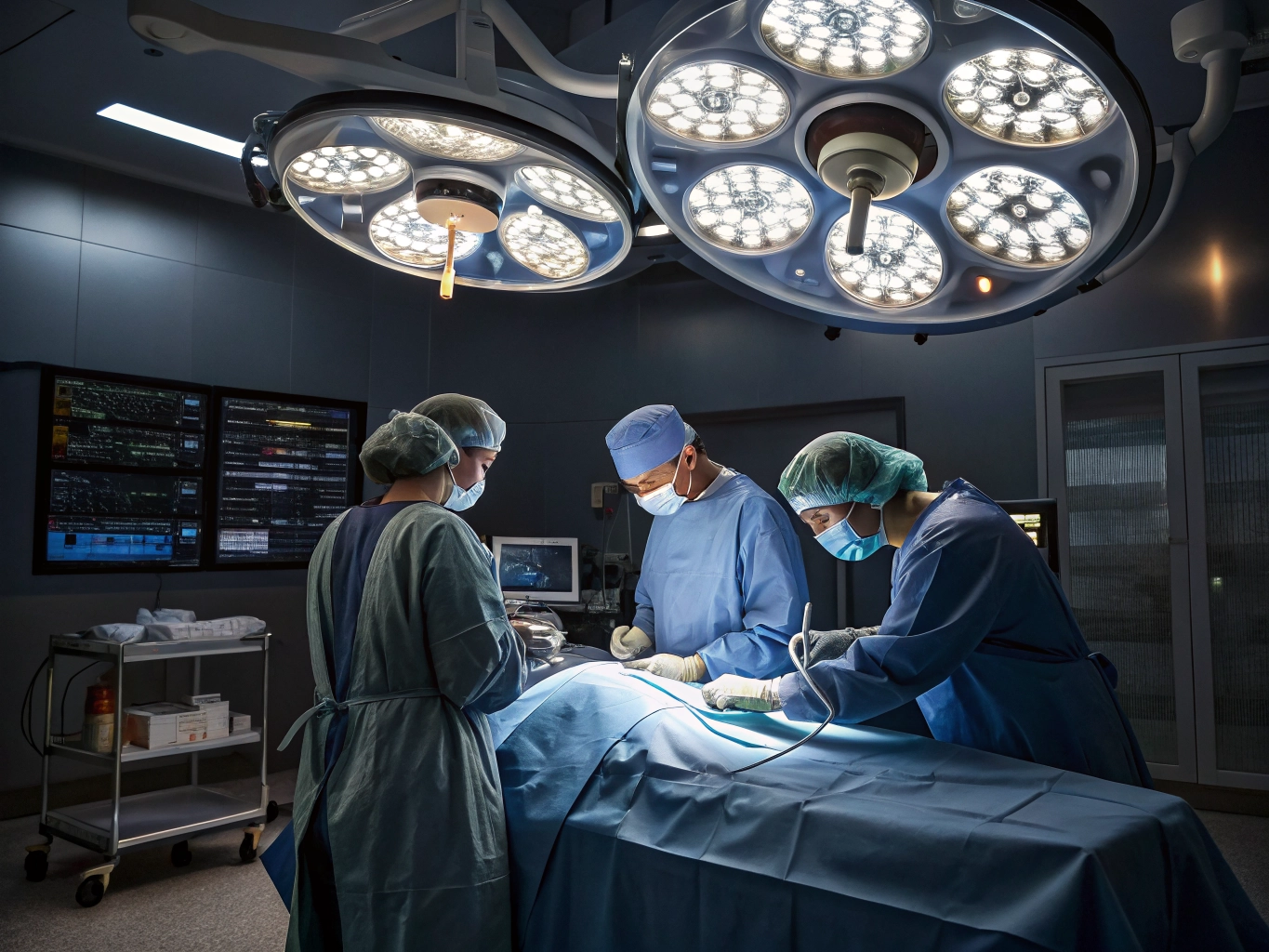
Severe pancreatitis can leave a large pocket of fluid and dead tissue walled off behind the stomach. Draining it used to mean open surgery on a patient already weakened by weeks of illness. This case, managed by our Interventional Gastroenterology Unit, was treated entirely through an endoscope.
The patient
A 62-year-old man came to Ethio Tebib Hospital with abdominal pain and repeated vomiting. He had previously been treated for acute pancreatitis caused by gallstones.
What the scans showed
An abdominal CT scan showed a large area of pancreatic walled-off necrosis, a collection of dead pancreatic tissue and fluid enclosed by a wall that forms over several weeks, together with a chronic clot in the splenic vein.
Endoscopic ultrasound, in which an ultrasound probe on the tip of an endoscope images the pancreas from inside the stomach, measured the collection at 10 by 8 centimetres and showed it contained both solid and liquid parts. That distinction matters: fluid alone can be drained, while solid dead tissue has to be removed.
The procedure
The team performed an EUS-guided cystogastrostomy: under ultrasound guidance, a channel was created between the collection and the stomach, and two double pigtail plastic stents were placed to hold it open. A large volume of fluid drained into the stomach immediately, where it passes harmlessly through the digestive tract.
The channel was then widened and a gastroscope passed directly into the cavity so that the dead tissue could be removed, a step called necrosectomy. All of this was done through the mouth. There was no incision, no drain through the skin and no open operation.
Recovery
His symptoms settled after the procedure and he was able to eat normally again. Follow-up imaging showed the collection had resolved completely.
What this means for patients
Walled-off necrosis after severe pancreatitis is a serious complication, and open surgery for it carries substantial risk. The endoscopic route avoids that, and patients recover in days rather than weeks. Ethio Tebib Hospital was the first hospital in Ethiopia to offer endoscopic ultrasound services and the first to perform EUS-guided cystogastrostomy, so this treatment is now available without travelling abroad.
If you have had severe pancreatitis and still have pain, vomiting, fever or difficulty eating weeks afterwards, ask for a scan. A collection like this does not always settle by itself.
The team behind this case
This case was managed by Dr. Abdulsemed Mohammed Nur, Gastroenterologist, and the interventional gastroenterology team at Ethio Tebib Hospital.
Book a consultation
For gastroenterology appointments, book online or call 9000, or our call centre on +251 935 402 078.