Chest pain that comes and goes for weeks is easy to dismiss. In this case it was the warning sign of severe disease in three of the heart’s arteries, treated in our Cardiac Center without opening the chest.
The patient
A 75-year-old woman was referred to Ethio Tebib Hospital from Somalia for advanced cardiac assessment. For several weeks she had felt an intermittent squeezing pain in her chest. She had high blood pressure but had not been taking regular treatment.
What the tests showed
ECG: a normal rhythm but a widened QRS complex with right bundle branch block, marked right axis deviation, and changes suggesting an old heart attack of the lower wall.
Echocardiography: ischaemic heart disease with mildly reduced pumping function of the left ventricle, mild thickening of the heart muscle, and degenerative changes of the mitral and aortic valves that were not yet severe.
Coronary angiography: this is the test that maps the arteries. It showed a severely calcified narrowing of 70 to 80 per cent in the middle of the left anterior descending artery, a critical 90 per cent narrowing at the mouth of the ramus intermedius, and a right coronary artery that arose from an unusual position, the left sinus, with a severe narrowing of about 80 per cent near its origin.
The treatment
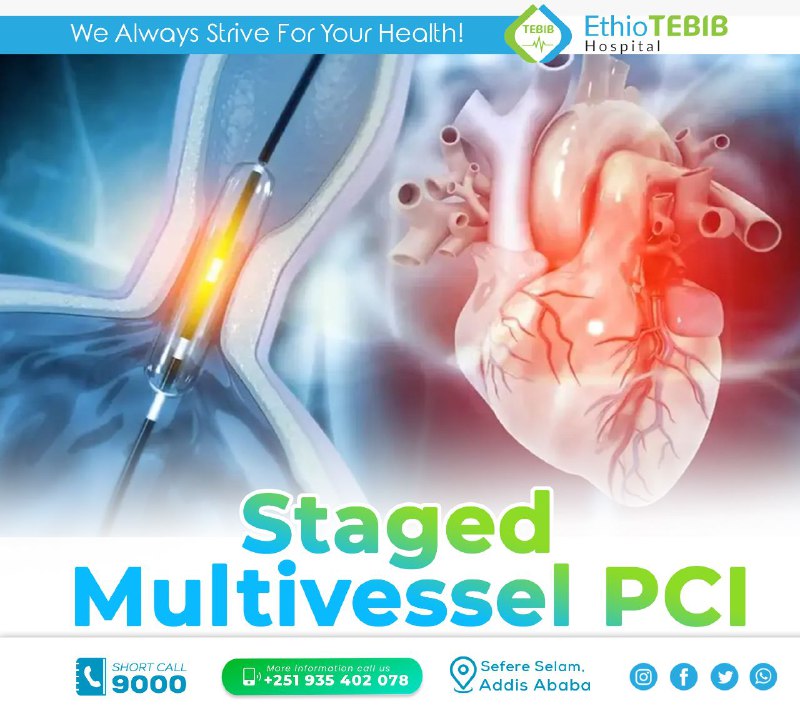
Bypass surgery is one option for disease in several vessels. Here the team judged that the narrowings could be opened from inside the artery. Through a small puncture in the wrist or groin, fine catheters are guided to the heart, the narrowing is widened with a balloon, and a drug-eluting stent is placed to hold the artery open.
She underwent percutaneous coronary intervention (PCI) with stents to the mid left anterior descending and ramus intermedius arteries, followed by a second, staged procedure to the anomalous right coronary artery, where two more stents were placed after balloon preparation. Treating the vessels in stages spreads the workload on the kidneys and the heart and is safer in an older patient.
Recovery
She was monitored in the high-dependency unit, remained stable with no rhythm problems and no bleeding at the puncture site, and continued on guideline-directed medicines: dual antiplatelet therapy, a high-intensity statin, a beta-blocker and better blood pressure control. She was discharged in stable condition and remained free of symptoms at follow-up.
What this means for patients
Chest pain on exertion, pressure or squeezing in the chest, or breathlessness that is new for you should be assessed, not waited out. Our cath lab runs a 24-hour service for heart attacks and has completed more than 1,500 procedures, including emergency and planned angioplasty.
The team behind this case
This case was managed by Dr. Mohammed Bediru, Internist and Interventional Cardiologist, with the cardiac and cath lab team at Ethio Tebib Hospital.
Book a consultation
If you or a family member needs specialist assessment, you can book an appointment online or call our short code 9000, open 24 hours. Ethio Tebib Hospital is on the road to Kolfe, Sefere Selam, Addis Ababa.