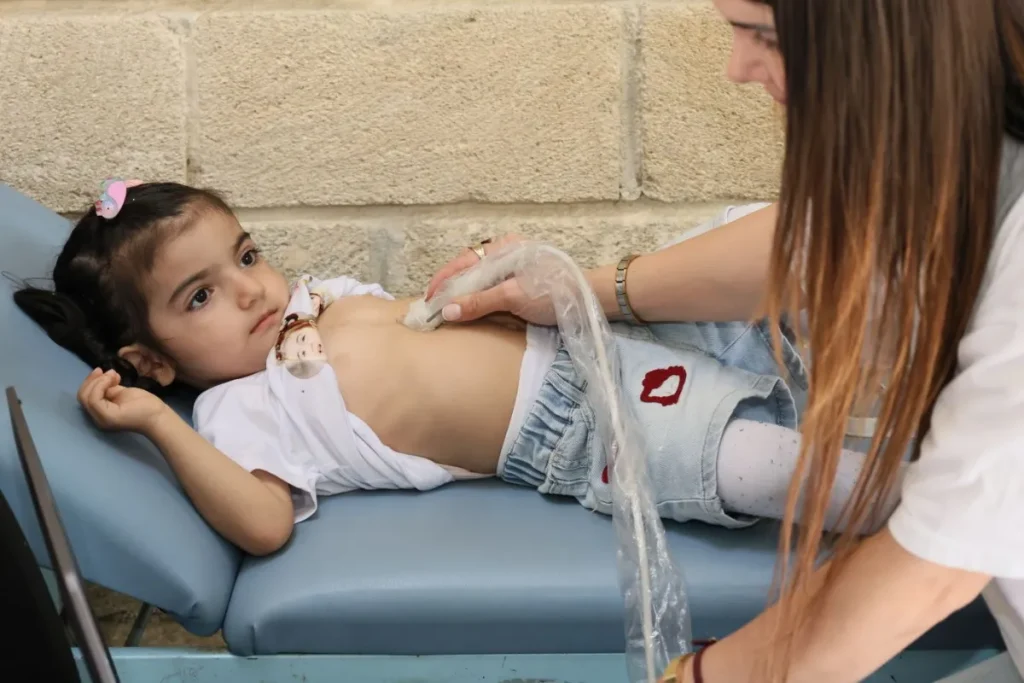
Intussusception happens when one part of the bowel slides into the next, like a telescope, and blocks it. It is one of the most common abdominal emergencies in young children.
The child’s story
A 2-year-old girl had three days of abdominal pain, repeated vomiting, a swollen tummy and bloody stool. Ultrasound confirmed a long ileo-colic intussusception with signs that the bowel’s blood supply was affected.
First-line treatment without surgery
Our team first tried ultrasound-guided hydrostatic reduction, where fluid is gently pushed into the bowel to unfold it. This is the preferred first treatment and often avoids surgery. Here, two careful attempts could not fully reduce it, so emergency surgery was needed.
Surgery
During the operation, the surgeons found the cause: a Meckel’s diverticulum, a small pouch of the bowel that some children are born with, which had acted as a lead point. The damaged section of bowel and the pouch were removed, and the healthy ends were joined.
Recovery
She recovered well and went home in stable condition.
What parents should know
- Come to the emergency department immediately if a young child has bouts of severe tummy pain, repeated vomiting, a swollen abdomen or bloody, jelly-like stool.
- The earlier a child is seen, the more likely the problem can be treated without surgery.
- Ethio Tebib offers ultrasound-guided reduction 24/7. Call 9000.
Related care at Ethio Tebib
Learn more about our Pediatrics Department and our Emergency Services in Addis Ababa.
The team behind this case
This case was managed by Dr. Aron W/Gebriel, Pediatric Surgeon, with our Pediatric Surgery and Radiology teams and the dedicated team at Ethio Tebib Hospital.
Need advice?
To book an appointment, book online or call our short code 9000. We are on the road to Kolfe, Sefere Selam, Addis Ababa.
This case was first shared on Hakim. It is published with the patient’s identity protected. It is for general information only and is not a substitute for medical advice.