Some heart conditions give very little warning. A person may feel palpitations or dizziness, carry on with daily life, and only later learn that the heart muscle itself is diseased. This case, managed in our Cardiac Center, shows how the right diagnosis and the right device can prevent a sudden death.
The patient
A 40-year-old man was referred to Ethio Tebib Hospital from Angola. He had already survived a cardiac arrest caused by sustained ventricular tachycardia, a dangerously fast rhythm from the lower chambers of the heart, and had been treated for it in his home country. When he reached us he was complaining of headache, dizziness and palpitations. He had no family history of heart disease or sudden death and no other chronic illness.
Finding the cause
Three tests told the story:
- Echocardiography showed an enlarged right atrium and right ventricle.
- ECG showed T-wave inversion in the chest leads V1 to V3, a classic pattern.
- Coronary angiography showed completely normal coronary arteries, ruling out blocked vessels as the cause.
Together these findings confirmed arrhythmogenic right ventricular cardiomyopathy (ARVC), a condition in which healthy heart muscle is gradually replaced by fat and scar tissue. The scarred muscle disturbs the heart’s electrical signals, which is why ARVC can cause life-threatening rhythms in otherwise young, healthy-looking people.
The treatment
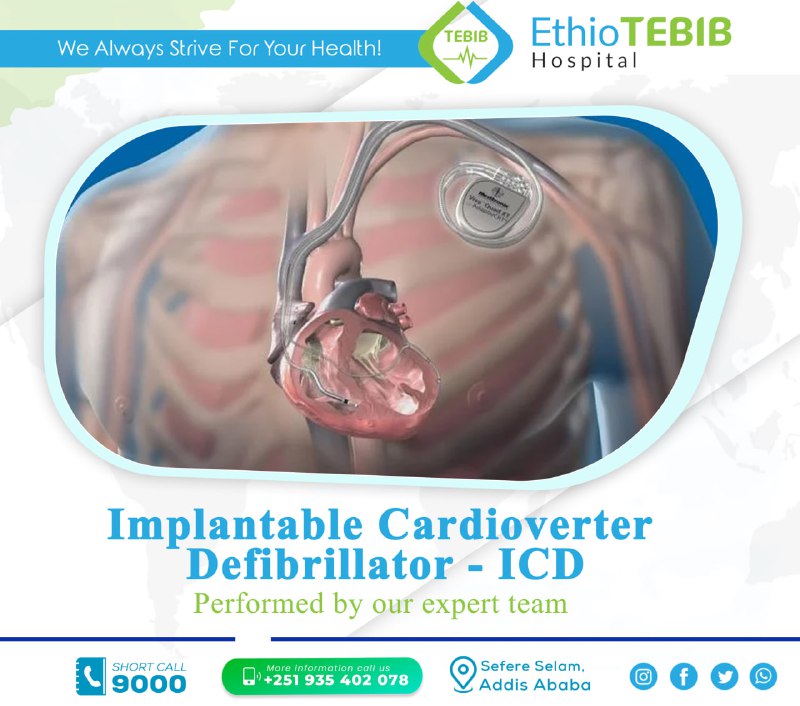
Medication alone cannot be relied on to stop a rhythm that has already caused one cardiac arrest. The team implanted a dual-chamber implantable cardioverter defibrillator (ICD), with a defibrillator lead and a pacing lead, as secondary prevention. An ICD watches every heartbeat. If a dangerous rhythm starts, it delivers a shock within seconds and restores a normal beat, wherever the patient happens to be.
Recovery
The implant went smoothly. The patient stayed stable throughout his admission and was discharged after two days. At follow-up he had no symptoms, and device interrogation, a check of the ICD’s own recordings and settings, showed satisfactory function.
What this means for patients
Palpitations, fainting, or a family history of sudden death in a young relative are all reasons for a cardiology assessment. ARVC is uncommon, but it is treatable once identified, and an ICD is an established, life-long protection. Our cath lab performs device implants, coronary angiography and angioplasty, and has completed more than 1,500 procedures.
The team behind this case
This case was managed by Dr. Mohammed Bediru, Internist and Interventional Cardiologist, together with the cardiac and cath lab team at Ethio Tebib Hospital.
Book a consultation
If you or a family member needs specialist assessment, you can book an appointment online or call our short code 9000, open 24 hours. Ethio Tebib Hospital is on the road to Kolfe, Sefere Selam, Addis Ababa.