Gallstones are common, and they can sit quietly for years. When they start causing symptoms, though, the pain can be intense and the decisions feel urgent: Is this something diet can calm down, or is surgery the safer next step?
A calm, structured way to think about gallstones is to separate three things: the pattern of symptoms, whether there are warning signs of complications, and how often attacks are returning.
What the gallbladder does and why stones form
The gallbladder is a small pouch under the liver that stores bile, a fluid that helps digest fat. After you eat, the gallbladder squeezes bile into the small intestine through a network of ducts.
Gallstones form when components of bile, commonly cholesterol, clump together and harden. Some people form a single stone; others form many. Stone size matters less than what the stone does. A tiny stone can slip into a duct and cause serious blockage, while a larger stone may stay put and cause intermittent attacks.
Risk rises with factors that change bile composition or gallbladder emptying, including weight changes, pregnancy, some medications, metabolic conditions, and family history.
Many gallstones cause no symptoms
A large share of people with gallstones never feel them at all. Estimates often cite that about 70% remain symptom-free, and only around 10% to 20% become symptomatic over about 10 years.
This is why an ultrasound report that mentions gallstones does not automatically mean surgery. The next question is always the same: Are the stones actually causing a typical gallbladder pain pattern or complications?
One sentence to remember: incidental gallstones are common; symptomatic gallstones deserve attention.
The classic symptom pattern: biliary colic
When a stone temporarily blocks the outlet of the gallbladder, the gallbladder contracts against the obstruction and pain rises quickly. This pattern is called biliary colic, though the pain is typically steady rather than crampy.
It often starts in the right upper abdomen or the upper middle area below the breastbone. Many people notice it after a fatty or heavy meal, often in the evening or at night, and it can last from minutes to a few hours.
After an attack, the pain can fade completely, which can be confusing. Feeling normal again does not mean the risk is gone; it often means the stone shifted and the duct is no longer blocked.
Common features that fit biliary colic include:
- Sudden, steady upper abdominal pain
- Right-sided pain under the ribs
- Pain radiating to the right shoulder or mid-back
- Nausea or vomiting
- A sense of fullness after rich foods
Indigestion, gas, and bloating can happen too, but those symptoms alone are not specific to gallstones. A careful history matters because reflux, ulcers, liver conditions, and even heart problems can mimic upper abdominal discomfort.
When symptoms signal a complication (seek urgent care)
Some gallstone problems are more than “an attack.” A stone can trigger gallbladder infection and inflammation, block the common bile duct, or obstruct the pancreatic duct and cause pancreatitis.
If any of the following occur, it is safer to treat it as urgent until proven otherwise:
- Fever or chills: May suggest gallbladder inflammation (cholecystitis) or bile duct infection (cholangitis)
- Yellow eyes or skin (jaundice): Can indicate common bile duct obstruction (choledocholithiasis)
- Pain lasting longer than a few hours: Persistent blockage and inflammation are more likely
- Very severe, constant upper middle pain to the back: Can be a sign of gallstone pancreatitis
- Confusion or marked weakness in older adults: Sometimes an infection presents atypically
These complications are treatable, but time matters. Early evaluation can prevent sepsis, organ injury, and prolonged hospitalization.
Symptoms vary by age and health status
Gallstones are less common in children, yet when they occur, pain and vomiting can look similar to adult symptoms. Some children remain symptom-free until a complication develops.
Older adults may not show the classic pattern. Pain can be less obvious, and infection may show up as confusion, decreased appetite, or general decline. People with diabetes or immune suppression can also present with less typical symptoms while still having serious disease.
Pregnancy can increase gallstone risk because hormones slow gallbladder emptying. Management during pregnancy is individualized, balancing symptom severity and timing, and surgery can still be appropriate when complications or repeated attacks occur.
How gallstones are diagnosed
Diagnosis usually starts with matching symptoms to objective findings. The goal is not just to “see stones,” but to confirm whether the gallbladder and bile ducts are inflamed or obstructed.
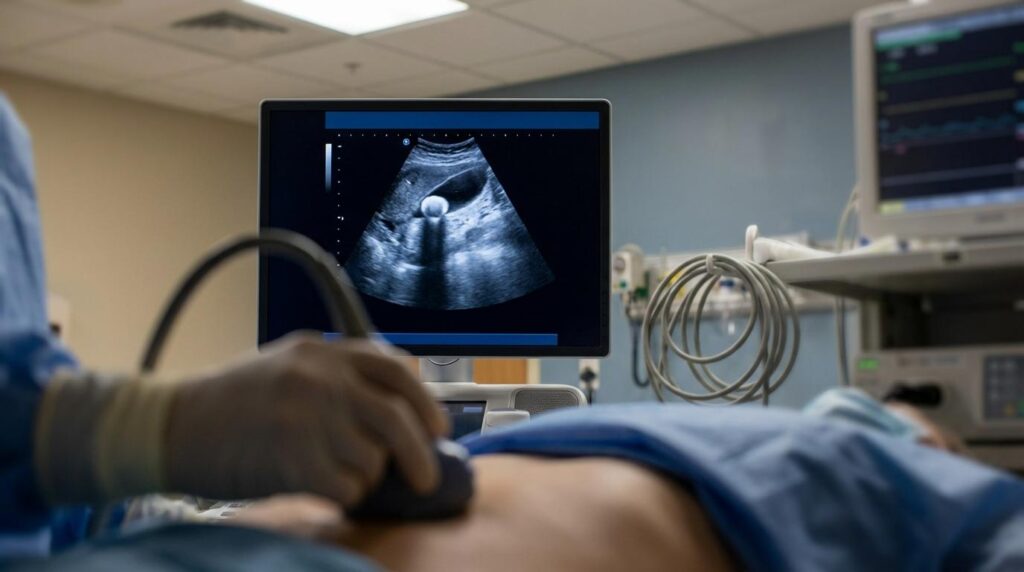
Ultrasound is the first-line test for gallbladder stones because it is noninvasive, fast, and highly informative. Blood tests often accompany imaging to look for signs of infection, inflammation, bile duct blockage, or pancreatitis.
More specialized tests may be used when the picture is unclear or duct stones are suspected, including MRCP (a specialized MRI of the bile ducts) or a HIDA scan to assess gallbladder function. CT scans can help when complications are suspected, though ultrasound remains central for stones.
In full-service hospital settings, these steps are often coordinated in one place: evaluation, imaging, lab testing, and consultation with gastroenterology and surgery when needed. Ethio Tebib Hospital, for example, offers ultrasound as a first step and access to advanced imaging and surgical care when escalation is required.
A practical symptom-to-action guide
| Symptom pattern | What it may mean | What to do next |
|---|---|---|
| Short attacks of RUQ or upper middle pain after fatty meals, no fever | Biliary colic from gallstones | Arrange clinic evaluation and ultrasound; discuss elective options if recurrent |
| Pain lasting more than a few hours, worse with touch, possible fever | Acute cholecystitis | Same-day medical assessment; labs and imaging; antibiotics and surgical planning |
| RUQ pain with jaundice, dark urine, pale stools, fever | Bile duct obstruction or cholangitis | Emergency care; labs, imaging; ERCP often needed |
| Intense epigastric pain radiating to the back with vomiting | Gallstone pancreatitis | Emergency care; pancreatitis workup; plan gallbladder removal after stabilization |
Diet tips that can reduce attacks and support prevention
Diet cannot reliably “melt” established gallstones, yet it can reduce how often the gallbladder is provoked and can lower future risk. The strongest nutrition pattern for gallstone prevention overlaps with heart-healthy eating: high fiber, balanced fats, and steady weight management.
Extreme low-fat diets and long fasting periods can backfire by letting bile sit in the gallbladder longer. A better target is moderate, consistent meals with sensible portions and healthier fats.
Practical habits that often help:
- Fiber first: Vegetables, beans, lentils, whole grains, fruit
- Smarter fats: Olive oil, nuts, seeds, fish; keep portions moderate
- Fried foods and sugary desserts: Reduce frequency and portion size
- Regular meals: Avoid skipping breakfast and long fasts when possible
- Weight loss pace: Aim for gradual loss rather than rapid drops
If someone is already having biliary colic, a lower-fat approach can reduce triggers while waiting for evaluation or surgery. After gallbladder removal, many people return to a normal diet, though very high-fat meals may cause loose stools for some. Smaller meals and slower reintroduction of rich foods can help.
When surgery is needed
Gallbladder removal (cholecystectomy) is the standard treatment for symptomatic gallstones because it removes the source of stones and prevents repeat blockage. The decision is usually straightforward when stones have started causing repeated pain or dangerous complications.
Surgery is commonly recommended when:
- Symptoms are clearly consistent with biliary colic and keep returning.
- Complications have occurred, including cholecystitis, bile duct obstruction, cholangitis, or gallstone pancreatitis.
- Imaging or clinical factors suggest higher risk even without frequent symptoms.
Most people with truly symptomatic gallstones feel major relief after cholecystectomy. Elective timing can be planned when attacks are frequent but complications are not yet present, which often lowers risk compared with waiting for an emergency.
Situations where surgery may be advised even without classic attacks
Asymptomatic stones are often observed, yet certain findings can shift the balance toward proactive removal because of higher long-term risk. Examples include a very large stone (often cited above 3 cm), a calcified “porcelain” gallbladder, or a gallbladder polyp above about 1 cm.
These decisions are individualized. The key is a clear discussion of risk, expected benefit, and the person’s overall health.
What treatment can look like when ducts are involved
Gallstones are not limited to the gallbladder. A stone can migrate into the common bile duct, and that changes management.
When a duct stone is suspected, clinicians may use MRCP to map the ducts or proceed to ERCP, an endoscopic procedure that can remove stones from the duct. After duct clearance, cholecystectomy is usually still recommended to prevent recurrence.
If a person is too ill for immediate surgery during severe cholecystitis, a temporary drainage procedure (percutaneous cholecystostomy) may stabilize the infection first. Surgery can then be scheduled when it is safer.
Laparoscopic vs open surgery and recovery expectations
Most gallbladder removal surgeries are laparoscopic, using small incisions and a camera. This approach usually means less pain, shorter hospital stay, and faster return to daily activities.
Open surgery is still important in selected cases, including severe inflammation with unclear anatomy, extensive scar tissue from prior surgery, or concern for unusual pathology. Conversion from laparoscopic to open during an operation can be a safety choice, not a setback.
Recovery varies, but many patients resume light activity within days and return to fuller routines within one to two weeks after laparoscopic surgery, guided by their surgical team’s advice.
Making the decision with confidence
If gallstones have been found, the most helpful next step is to name the pattern:
- Does the pain match biliary colic?
- Have there been warning signs like fever, jaundice, persistent pain, or pancreatitis?
- Are attacks becoming more frequent or disruptive?
- Do labs and imaging suggest duct blockage?
With a clear diagnosis, treatment becomes much simpler. Some people do well with monitoring and diet adjustments. Others benefit from timely surgery, often before an emergency forces the schedule.
A careful evaluation, good imaging, and an experienced multidisciplinary team can turn a painful, uncertain problem into a plan that feels steady and reassuring.