Two spine problems at once usually mean two operations, weeks apart, and two recoveries. For a 68-year-old man treated by our Neurology & Neurosurgery team, both were dealt with in a single session.
The patient
He came to Ethio Tebib Hospital after months of progressive weakness and numbness in both arms, severe low back pain, and nerve pain running down the leg that made ordinary daily tasks difficult.
What the scans showed
Imaging found an unusual combination:
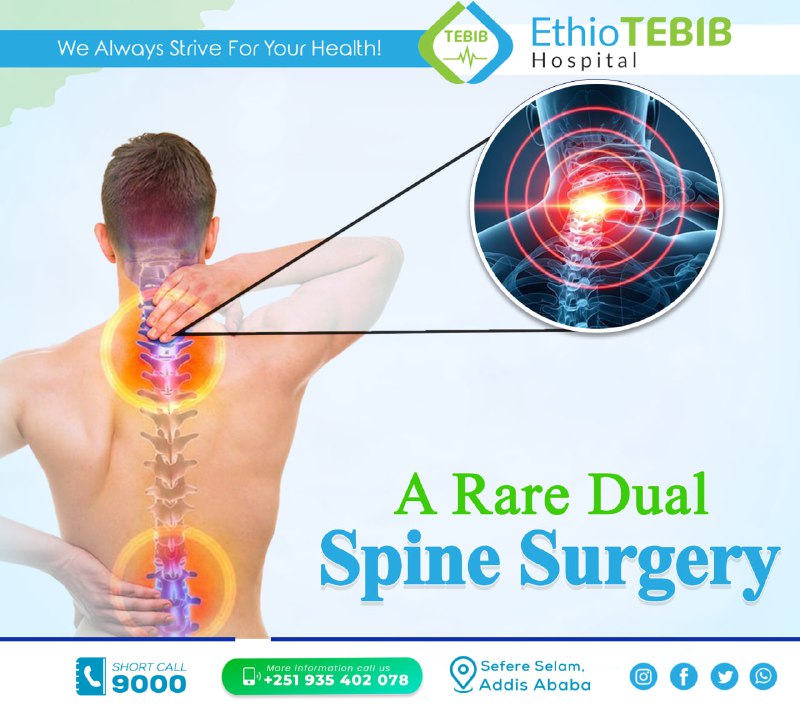
- A large cervical disc herniation at C3/4, pressing on the spinal cord in the neck. Cord compression is what causes weakness and numbness in the hands and arms, and left untreated it can progress.
- A significant lumbar disc herniation at L5/S1, pressing on the nerve roots and causing the back and leg pain.
Both needed surgery, and neither could safely be left for months.
The operation
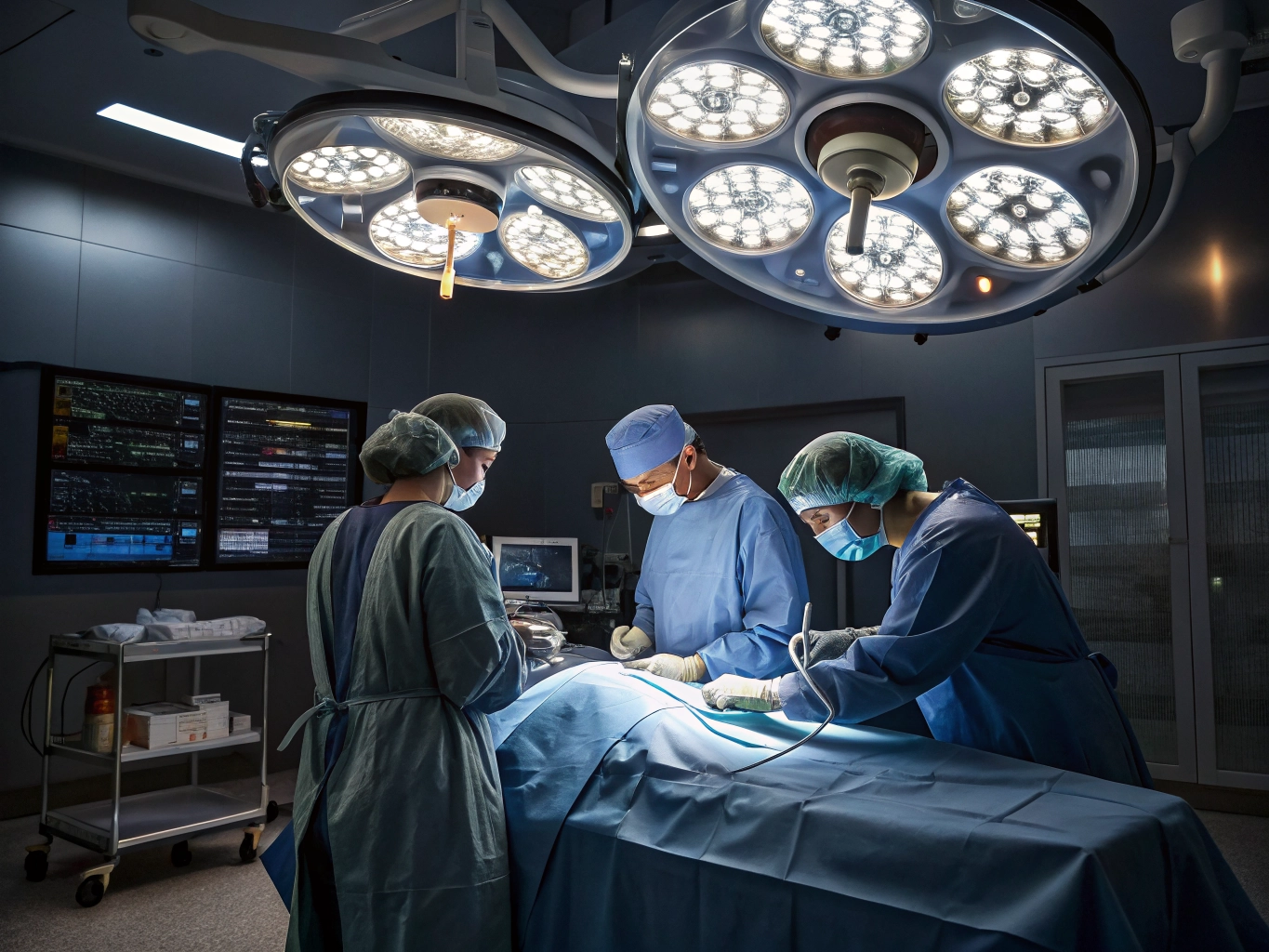
The team decided to treat both levels in one anaesthetic, which is technically demanding and requires careful coordination, but spares the patient a second admission and a second anaesthetic.
Stage one: with the patient lying on his back, a C3/4 anterior cervical discectomy and fusion (ACDF) was performed using a zero-profile titanium cage. The damaged disc was removed from the front of the neck, releasing the pressure on the spinal cord, and the cage was placed to keep the space open and allow the bones to fuse.
Stage two: the patient was turned face down for an L5/S1 laminectomy and discectomy. The herniated fragment was removed and the trapped nerve root released.
Recovery
By the next morning the change was already clear. Strength was returning in his arms, the numbness was fading, and the back and leg pain had settled substantially. On the second day after surgery he was walking independently and was discharged.
What this means for patients
Weakness or numbness in the hands, clumsiness, difficulty walking, or pain radiating down an arm or leg are signals to have the spine assessed rather than to keep taking painkillers. Most back pain does not need surgery, but nerve or cord compression that is getting worse does, and the outcome is better when it is treated before the weakness becomes permanent.
The team behind this case
This case was managed by Dr. Seyum Debebe, Neurosurgeon, and Dr. Samson Assefa, Neurosurgeon, supported by Dr. Ephrem Hailu, Anaesthesiologist, with the neurosurgery, anaesthesia and perioperative care teams at Ethio Tebib Hospital.
Book a consultation
If you or a family member needs specialist assessment, you can book an appointment online or call our short code 9000, open 24 hours. Ethio Tebib Hospital is on the road to Kolfe, Sefere Selam, Addis Ababa.